The United States Coast Guard Academy is a top military college granting Bachelor of Science degrees in one of ten engineering or professional majors. Graduates earn a commission as an Ensign in the Coast Guard to serve their nation.
The U.S. Coast Guard Academy is an elite professional college that charges no tuition and guarantees a challenging and rewarding career upon graduation.
Ranked among the nation’s most prestigious institutions of higher learning, the Academy is proud to educate future leaders of America’s multi-mission, maritime military force. Each year, approximately 200 graduates are commissioned as Coast Guard officers to help ensure the safety, security, and stewardship of our nation’s waters. This isn’t just college—it’s college with a purpose.
“To graduate young men and women with sound bodies, stout hearts and alert minds, with a liking for the sea and its lore, with that high sense of honor, loyalty and obedience which goes with trained initiative and leadership; well-grounded in seamanship, the sciences and amenities, and strong in the resolve to be worthy of the traditions of commissioned officers in the United States Coast Guard in the service of their country and humanity.”
The development of proven attributes and skills is essential to earning a commission and successful service as an Ensign in the United States Coast Guard. These Shared Learning Outcomes are observable results that define the unique qualities, character, and knowledge of the graduates of the United States Coast Guard Academy…and enable them to stand out in the Service and beyond.
Graduates shall be leaders of character who understand and apply sound leadership principles and competencies.
Graduates shall maintain a professional lifestyle that embraces the Coast Guard’s Core Values of Honor, Respect and Devotion to Duty, including physical fitness and wellness, mental and physical resilience, and an inclusive mindset. Our graduates must also adhere to customs, courtesies and social skills befitting members of a maritime military service. Finally, graduates must understand the Coast Guard’s maritime heritage and the roles that the Coast Guard and the nation play within the global environment;
Graduates shall have acquired and integrated the in-depth knowledge associated with both an academic major and a military, maritime professional. Officers must also possess the skills and motivation for lifelong learning, including the ability to identify a need for information, and to locate, evaluate, and effectively use that information to address the issue or problem at hand;
Graduates shall be able to write clearly, concisely, persuasively, and grammatically; prepare and deliver well-organized and polished oral presentations; read and understand a variety of written materials; listen thoughtfully to oral arguments; respect diverse opinions; and formulate reasoned alternatives and responses;
Graduates shall be able to accomplish complex tasks in a broad range of contexts by applying the basic skills of critical analysis, systems thinking, quantitative reasoning, risk management, creative problem solving, and value-based decision-making.
student-to-faculty ratio
Cadets per class average
Cadets enrolled at the Academy
of cadets play on varsity teams
graduate in a STEM major
job placement. Graduates are obligated to serve for 5 years and 85% stay longer!
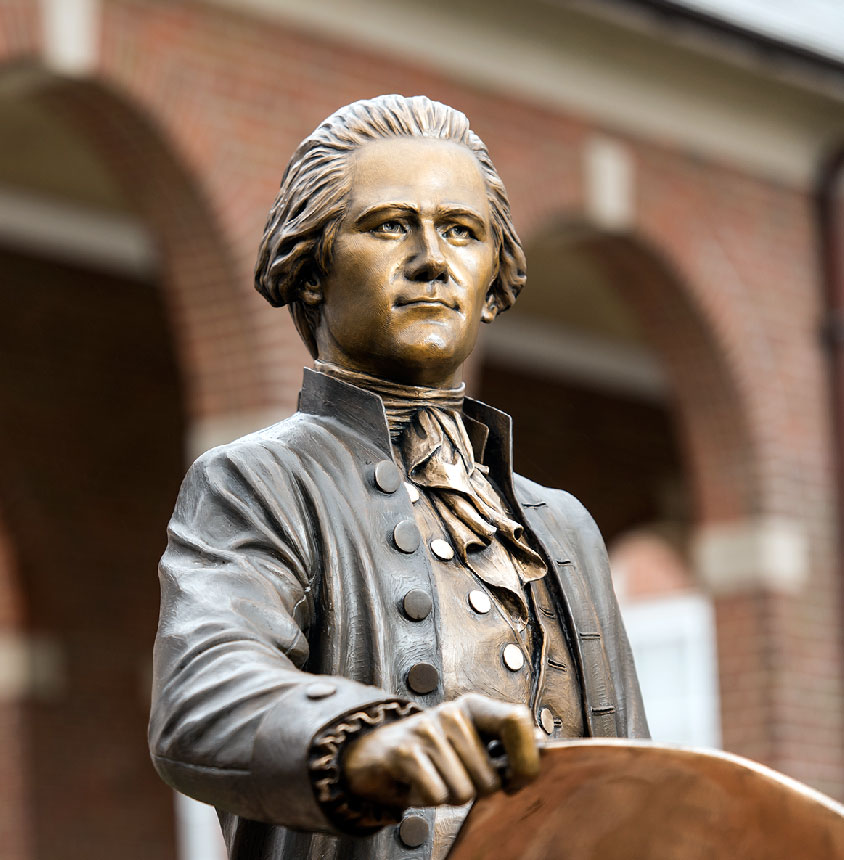
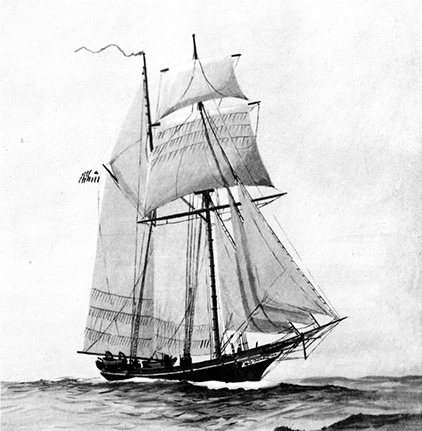
Formation of the Revenue Cutter Service – to ensure the financial survival of the United States. “A few armed vessels, stationed judiciously at the entrances of our ports, might at a small expense be made useful sentinels of the law.” Alexander Hamilton
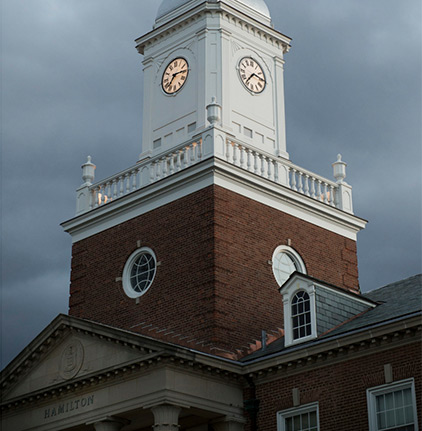
The Academy moved to its current location about two miles up the Thames River in 1932. Cadets initially moved into Hamilton Hall where their classrooms, barracks, and library were all located. Today, the facility has expanded to encompass some 34 buildings and 103 acres of rolling hills.
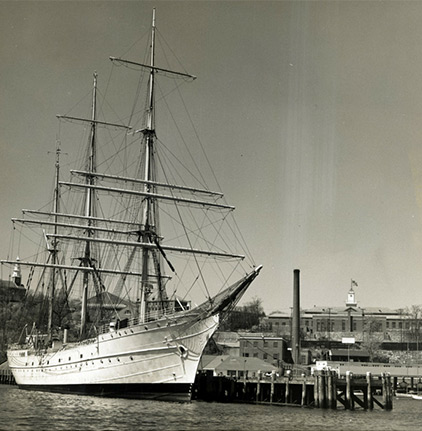
America’s Tall Ship, EAGLE. Seized as a war prize from Nazi Germany, EAGLE left Bremerhaven and arrived in her new home in New London to serve continuously ever since as a sail training ship for cadets.
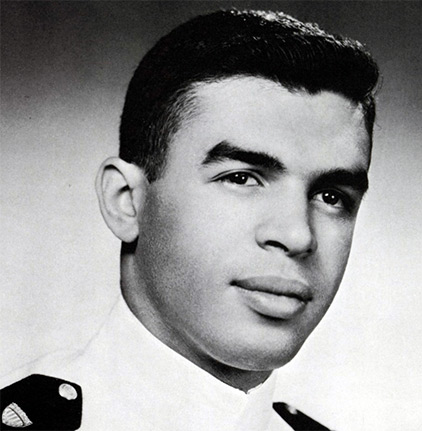
Pioneer spirit. In 1966 Merle Smith graduated from the Academy, the first African American to do so. Before earning his law degree, CDR Smith earned the Bronze Star, with Valor, for action during the Vietnam War.
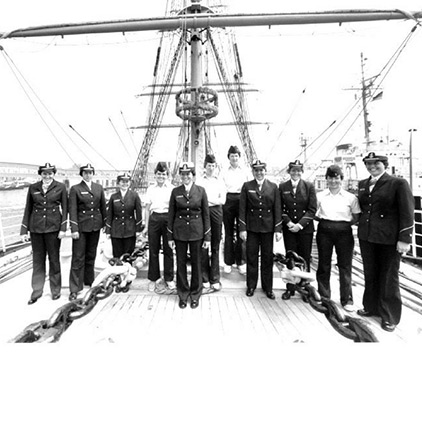
Old traditions, new horizons. In 1976 the Academy opened its doors to women and international cadets. Some of the first women are pictured aboard EAGLE, in Hamburg, Germany in 1977 during cadet cruise.
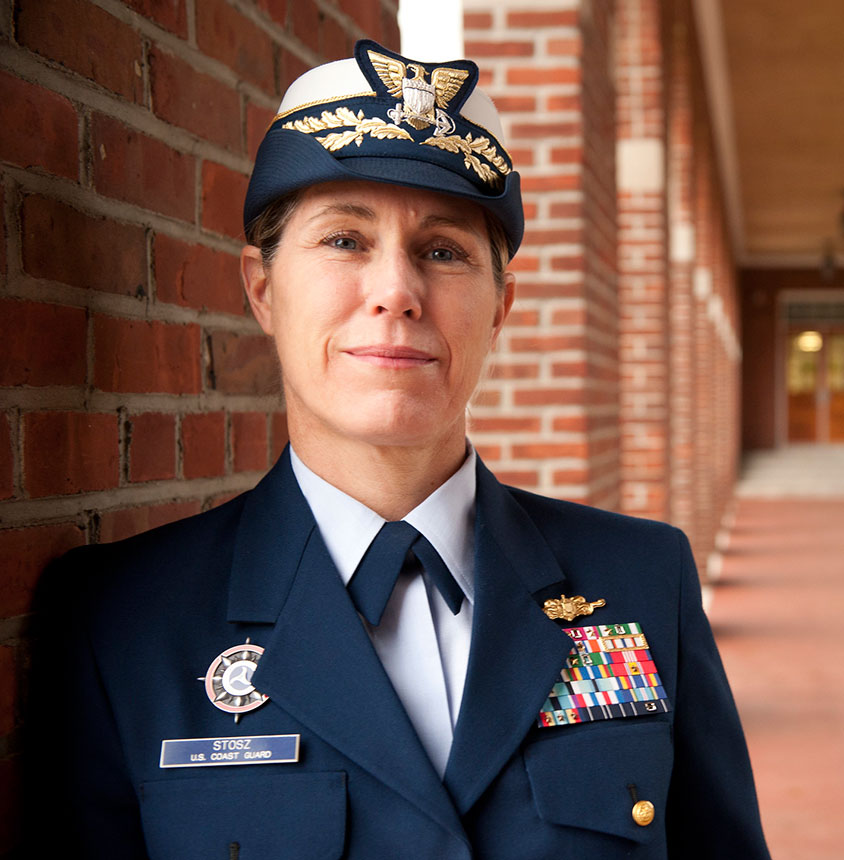
2011
Trailblazer. In 2011, when RADM Sandra Stosz ’82 became Superintendent of the U.S. Coast Guard Academy, she also became the first woman to lead a U.S. federal service academy. Trailblazing was nothing new to Stosz, who is also the first female Academy graduate to achieve flag rank and who in 1990 became the first woman to command a Coast Guard cutter on the Great Lakes.
Formation of the Revenue Cutter Service – to ensure the financial survival of the United States. “A few armed vessels, stationed judiciously at the entrances of our ports, might at a small expense be made useful sentinels of the law.” Alexander Hamilton

Ashore in New London. Fort Trumbull, the historic Revolutionary War Army installation, was turned over to the Revenue Cutter Service in 1910. The fort housed the Revenue Cutter Academy, which was renamed the United States Coast Guard Academy in 1915.

Congress consolidates a number of maritime agencies, including the U.S. Revenue Cutter Service, the U.S. Life Saving Service and others, to create the modern U.S. Coast Guard.

The Academy selected a Black Bear as its mascot, and soon after a live bear cub named “Objee,” short for “objectionable presence” arrived on campus. For more than 50 years a bear cub was kept on campus until 1984 when the last live mascot was retired to a farm in update New York. Today, Objee is memorialized by a statue in Bear Plaza and by cadets who routinely wear a mascot costume at pep rallies and athletic events.

The Academy moved to its current location about two miles up the Thames River in 1932. Cadets initially moved into Hamilton Hall where their classrooms, barracks, and library were all located. Today, the facility has expanded to encompass some 34 buildings and 103 acres of rolling hills.
America’s Tall Ship, EAGLE. Seized as a war prize from Nazi Germany, EAGLE left Bremerhaven and arrived in her new home in New London to serve continuously ever since as a sail training ship for cadets.
Pioneer spirit. In 1966 Merle Smith graduated from the Academy, the first African American to do so. Before earning his law degree, CDR Smith earned the Bronze Star, with Valor, for action during the Vietnam War.
Old traditions, new horizons. In 1976 the Academy opened its doors to women and international cadets. Some of the first women are pictured aboard EAGLE, in Hamburg, Germany in 1977 during cadet cruise.
2011
Trailblazer. In 2011, when RADM Sandra Stosz ’82 became Superintendent of the U.S. Coast Guard Academy, she also became the first woman to lead a U.S. federal service academy. Trailblazing was nothing new to Stosz, who is also the first female Academy graduate to achieve flag rank and who in 1990 became the first woman to command a Coast Guard cutter on the Great Lakes.